What Outbreak Metrics Can and Cannot Tell Us About the Ebola DRC Response
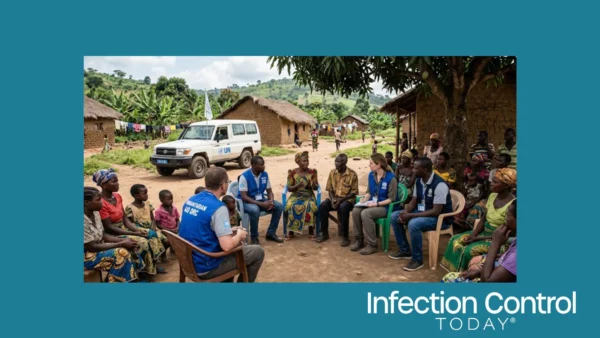
The 17th Ebola outbreak in the Democratic Republic of the Congo (DRC) has surpassed 6271 confirmed cases and 3041 deaths.
Cases and health response
The case fatality ratio is nearly 1 in every 2 confirmed cases.
A central question looms: Is the outbreak finally turning a corner, or is it getting worse?1 Recent indicators reveal an uneven response to the outbreak: despite genuine progress over the last 4 months, persistent operational hurdles continue to stall containment.
Where the Numbers Align: Documenting Ground-Level Wins Four measures of transmission have moved in the right direction, and they deserve to be stated plainly before anything qualifies them (Figure 1).
Cases are doubling far more slowly than in May; daily incidence remains well below its late July peak; weekly totals have dropped for 2 consecutive weeks; and the time-varying reproduction number (Rt) has followed suit.2 Among these metrics, doubling time is the most reliable.
It is straightforward math on what was directly observed, requiring no modeling or assumptions about the time between successive infections. The response has moved too.
The DRC rolled out 70,000 doses of Ervebo, licensed for Zaire ebolavirus, to frontline health workers, setting aside 20,000 of those doses for a phase 3 trial testing protection against Bundibugyo virus.2 Concurrently, early-stage trials began for 2 Bundibugyo-specific candidates in the UK from July 24 and in Canada from August 3.3,4 The operational challenges show why this is a more complex picture.
On August 31, 43 of the 57 confirmed deaths recorded in a 24-hour window occurred in the community rather than in a treatment center.6 These community deaths represent 75.4% of the daily mortality.6 Over the last 14 days, 63% of the reported 719 deaths.6 A person who passes at home without safe burial practices, during peak viral shedding, that is the work still ahead.